
Hunter Eyes: What They Are, Why They Matter, and How to Improve Yours
Last updated: April 20, 2026
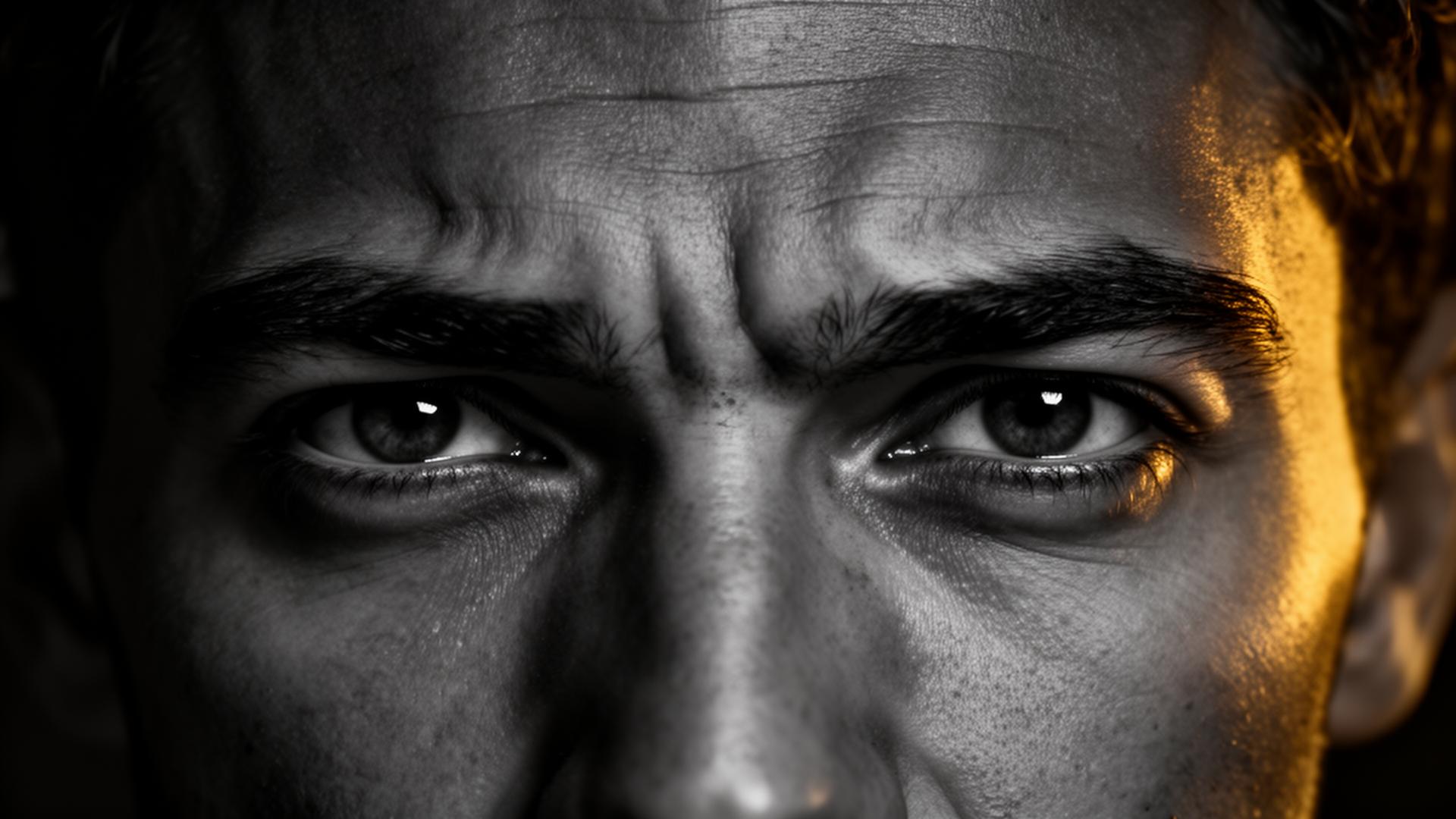
Hunter eyes are characterized by positive canthal tilt, deep-set positioning, compactness, and upper eyelid hooding. They are one of the highest-weighted features in PSL scoring because they signal masculinity, high testosterone, and strong bone structure. Canthal tilt is primarily genetic but body fat reduction, sleep quality, and grooming can meaningfully improve how the eye area reads.
FAQ
Hunter eyes are a very common topic of conversation in looksmaxxing communities, and for good reason. You'll see these discussions in PSL ratings, facial assessments, and even in debates around the attractiveness of a face.
What really are hunter eyes? Why are these eyes so important? The best question of the three: is there a possibility to improve eyes to look like 'hunter eyes' or is it genetic?
This guide offers the best overview for the "best" eyes. This guide will cover the implications of hunter eyes, the calculations that are available to improve any given hunter eye, the importance of such eyes, and most importantly, the best techniques available to solve the problems of canthal tilt and eye region.
What are hunter eyes?
Hunter eyes and facial attractiveness, specifically for men, have a close relationship. The term gets its meaning for robust predators as opposed to men or women. Robust predators have deep-set eyes that face forward. They contrast wide shallow eyes at the sides of the head, and, therefore, the robust shallow predators are the "prey".
In this context, and in 'human' face, hunter eyes would be labelled as:
- eyes that are deep-set
- are positively tilted
- look compact
- and, somewhat, are hooded
The 'prey eye' attributes are large, round, wide-open eye shapes, with a neutral to negative canthal tilt, which are less dominant and less masculine, and are perceived as such, regardless of how attractive the overall face is.
Canthal tilt: the dominant measurement
Canthal tilt is the single most significant measurement that determines the presence of hunter eyes.
Canthal tilt is the angle of the eye, referred to as the height variance at the inner eye corner (medial canthus) and the outer corner (lateral canthus).
- Positive canthal tilt: the outer corner is higher than the inner corner, and this is the eye characteristic of hunter and, creates an upward slant to the eye which is perceived to be intense, masculine, and dominant.
- Neutral canthal tilt: the inner and outer corners are at an equal height, that is, neither positively nor negatively.
- Negative canthal tilt: the outer corner is lower than the inner corner, and does have an eye appearance, and this is a downward droop, with a significant reduction of perceived attractiveness and perception of masculinity.
Canthal tilt is a defining measurement, and a small canthal tilt variance, is even more significant to face reading. A few degree positive tilt, is a perception of higher attractiveness, than an average face, and is, most attractive.
Hunter eyes and PSL score importance
The PSL rating system values a lot of different features when scoring a face, and one of the most heavily valued features is eyes.
The eyes are typically the first thing one notices when taking in a face, and first impressions are heavily determined through the eyes. There is a lot of information that can be lost, and gained, when assessing the eyes, including health, genetics, and dominance.
There is a strong correlation between deep-set eyes with positive canthal the high level of testosterone with a well-developed bony structure, and strong features in the brow and orbital bones. These features are considered more visually attractive and are hunted after.
In contrast, round eyes, with a negative tilt are seen as softer and show a level of less dominance.
It is fair to say that between two men, with similar features, their eye area can bring about drastically different scores.
Are your eyes the so called "Hunter Eyes"?
To assess your own canthal tilt, take a straight-on photo in neutral lighting — no expression, eyes relaxed and open naturally.
Draw an imaginary line from the inner corner of one eye to the outer corner. If the outer corner is above that line, then you have a positive canthal tilt. If the outer corner is on the line, then you are neutral. If the outer corner is below the line, then you have a negative canthal tilt.
You can also evaluate the following:
- Depth of eyes — The side profile provides the most useful observation. Do the eyes have a sunken-in appearance or protruding? Generally more protruding is better.
- Hoodedness — How much of the upper eyelid is visible? Lesser degree (more hooded) exposure tends to be more attractive in men.
- Vertical compactness of eyes — Do your eyes have a vertically large opening or are they vertically compact? Compact reads more masculine.
AI facial analysis is the best method to assess all the above at once. Handsome AI scores your eye area as part of its full facial breakdown providing a score on canthal tilt, eye depth, overall eye area quality, and other metrics for your face.
The most accurate looksmax AI face rater.
Handsome AI analyzes 10+ facial categories — jawline, canthal tilt, symmetry, and more — then builds your personalized glow-up plan.
Download Handsome AICan your hunter eyes improve?
The answer is canthal tilt — which is determined by the underlying bone structure, specifically the orbital bones and the position of the lateral canthus. Unfortunately, you cannot change your bone structure with lifestyle.
That said, there are ways (some costing nothing, others are surgical) to improve the overall appearance of the eye area.
Softmaxxing your eye area
Fat loss around the eyes
Eye fat loss results in a less puffy look and more apparent definition in the deep-set eyes. It is also very noticeable when someone has less than 15% body fat. The deep-set eyes look hollow at first, but the skeletal structure is very prominent when the fat is gone. Most men have a better canthal tilt, and eye depth than they realize when the eye fat is removed.
Sleep and inflammation
Chronic sleep deficiency causes swelling of the periorbital area (inflated areas around the eyes that makes eyes look less deep) which contributes to a more shallow appearance of the eyes. Good quality sleep (8 hours) is the best and most neglected way to improve the area around your eyes. Reducing sodium and alcohol also contribute to a reduction in the puffiness around the eyes.
Mewing and tongue posture
Mewing is thought to apply continuous upward pressure to the bone of the palate which may gradually change the positioning of the orbital bone. The evidence to support this is very small — results may take years, possibly a decade, of consistent mewing, but tongue posture has no cost and may have a structural benefit in the long run.
Grooming
Grooming, specifically of the eyebrows, can dramatically change the appearance of your eyes. A more defined high arch and good grooming give an eye a more apparent canthal tilt. Do not over groom to the point of having a cartoonish appearance. A natural look with immaculate shaping is the way to go, specifically when removing the unibrow and clearing strays.
Skin care for the eye area
Using a good quality eye cream with retinol and peptides can improve skin quality and fine line problems with the skin around the eyes. This doesn't change canthal tilt, but does improve the the eye area's skin quality. Use SPF because the eye area is the first to show sun damage.
Eye area hardmaxxing
For those seeking to pursue this path even further, there are medical and surgical options for direct manipulation of canthal tilt and other eye area characteristics.
Canthoplasty and canthopexy
These procedures surgically modify the position of the lateral canthus, which is the outer corner of the eye. Canthoplasty can create or enhance positive canthal tilt by literally lifting the outer corner of the eye.
This is a real surgical option and has real results, however, there are real risks. Potential complications include asymmetry, scarring, and a change in eye shape. This procedure requires a surgeon with an exceptional level of skill, and a great deal of research before this is even considered.
Lower eyelid retraction surgery
Negative canthal tilt can be the effect of lower lid retraction, which is where the lower lid is positioned too low in relation to the iris. This surgery corrects this by raising the lower lid which in turn improves canthal tilt without direct alteration of the lateral canthus.
Brow bone augmentation
This procedure increases the projection of the brow ridge through the use of implants or fat grafting. It can enhance the effect of eyes being deep-set. This is a substantial commitment surgical option that changes the upper facial structure significantly.
A note on hardmaxxing. These procedures are serious in nature and should only be considered after every other option has been exhausted after extensive research. These procedures should only be performed by the most qualified hand. Be patient, and do not rush eye surgery. The eye area is the most sensitive and most difficult to correct in the event of an error.
Realistic expectations
If you have a neutral or mildly negative canthal tilt, you can make meaningful improvements to the eye area from a softmax perspective (without surgery) after getting lean and improving your sleep.
If you have a strongly negative canthal tilt, and once the rest are all optimized, there are surgical options, which are valid, but you have to do a lot of leg work to understand them and they come with risks.
A crucial first step is an assessment of your eye area, how high or low your score is, what the major problems are, and what the minor problems are. That's what Handsome AI's facial analysis does. It gives you a score breakdown of canthal tilt, eye depth, and the eye area, and compares them to all other facial metrics, plus a custom list of recommendations.
Summary
Positive canthal tilt, deep set, compact, and hooded eyes are what define hunter eyes. This feature is one of the top scorers in PSL ranking and facial attractiveness research.
While canthal tilt is mostly independent of other factors, the presentation of your eye area can be dramatically improved by sleep, cooking, and body fat. Beyond that, there are surgical options.
Establish your baseline first. Before doing anything, make sure you have a clear picture of where your eye area scores.
The most accurate looksmax AI face rater.
Handsome AI analyzes 10+ facial categories — jawline, canthal tilt, symmetry, and more — then builds your personalized glow-up plan.
Download Handsome AIFAQs
Related articles

I Tried All the Looksmax AI Apps — These Apps Actually Work
An honest comparison of every major looksmax AI app in 2026 — what they measure, where they fall short, and which one actually gives you actionable results.

Looksmax AI: The Complete Guide to AI Face Rating in 2026
Everything you need to know about looksmax AI — how it works, what it measures, and how to get the most accurate AI face rating available in 2026.
Handsome AI vs Umax vs Looksmax AI: Are They Useful Face Rating Apps?
An honest comparison for PSL-literate men who want accurate facial analysis, consistent scoring, and a real improvement plan — not gimmicks.